

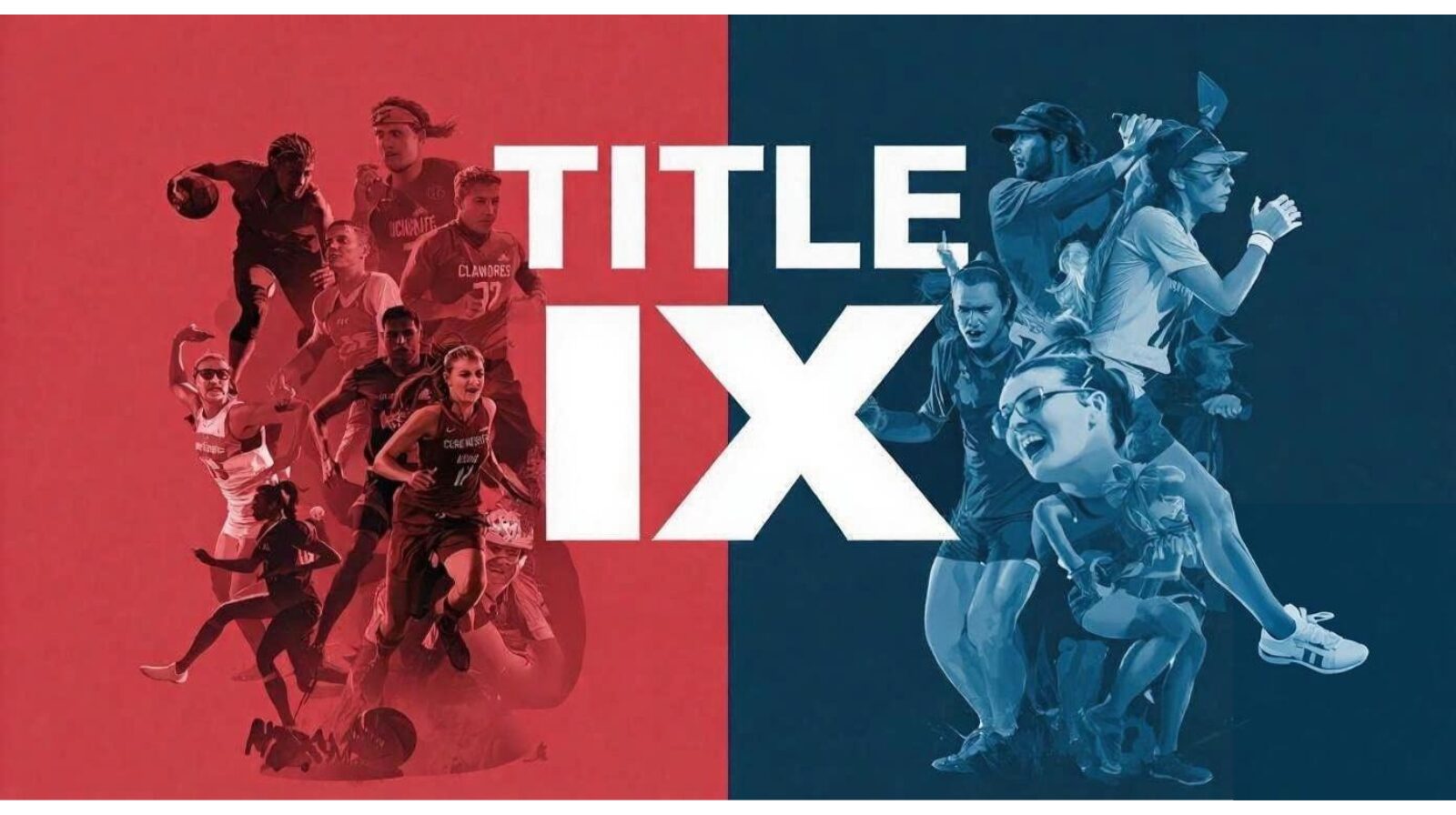
How a half-century-old equity program fostered a historic boom in business
Impactivize Reporting by Laura López Ramos – January 13, 2026
One afternoon in 2016, gender economist Katica Roy was trying to find a women’s soccer match on TV for her soccer-loving daughter, but she couldn’t find a single broadcast. Turns out they didn’t exist; only men’s games were available. At the tender age of 5, her daughter wasn’t surprised at the disparity. She turned to Roy and said, “Well, girls don’t play soccer. Only boys do.”
Roy, the founder of Pipeline, an SaaS company that uses artificial intelligence to drive financial gains through gender equity™, says that the lack of visibility of women’s sports limited not only fan engagement but also her daughter’s access to sports careers and belief in her own potential.
Now nearly 15, her daughter, an elite youth soccer goalkeeper with hopes of one day playing professional soccer and being on the U.S. Women’s National Team, says she hopes little girls “grow up never questioning whether they belong in sports. I want them to see women playing on TV so it just feels normal, not like something new or unusual.”
Change that’s been a long time coming
Today, Roy says, women’s sports opportunities have skyrocketed thanks largely to the long-range effects of Title IX, a 1972 federal law that ensures that male and female students and employees in educational settings are treated equally and fairly.
“One of the reasons why we see such a huge explosion in women’s sports is that this pipeline has been building for over 50 years, since Title IX was put into place in 1972,” Roy explains. The growth numbers are staggering: from just 300,000 girls playing high school sports in the early 1970s to over 3.4 million today, a more than tenfold increase.
Tuti Scott, former co-CEO of the Women’s Sports Foundation and long-time Title IX advocate, describes the legislation as “foundational” for women’s sports. “Title IX is absolutely the source of where we are today.” Scott says that, while there is still a lot of work to be done, Title IX has helped create the conditions of equity and fairness for women and girls. “There have been legends in women’s sports, but you never got to see them play. And now people are getting to see the talent that’s always been there,” she posits, adding that streaming and social media have helped bring visibility to women’s sports.
Turns out, equity is good for business
Scott says people often forget how transformative Title IX was, stating its implications extend into every other arena of life. From an economic perspective, Title IX’s impact on women’s sports as an industry is undeniable. The rise in women’s sports demonstrates how expanding access and opportunity creates not just fairness but also flourishing markets. What started as a diversity, equity, and inclusion (DEI) initiative became the catalyst for the exponential growth of the women’s sports industry, which is projected to reach $2.35 billion in global revenues by 2030.
According to Scott, corporate sponsors are what drive sports. Citing a recent survey by the Women’s Sport Trust, she states that 86% of women’s sports sponsors have met or exceeded their ROI. She further explains that these brands “are getting the desired result they want in terms of exposure, brand affiliation, consumer transactions, and consumer engagement.”
A marketer survey from McKinsey found that brands are increasing their sponsorship spending in women’s sports, not just to capitalize on the growing viewership, but also as a way to advocate for inclusion and gender equality as part of their brand messaging. By investing in women’s sports now, brands are not only gaining early equity in a surging market, but also signaling their commitment to DEI.
With more leagues, investors, media partners, and brands betting big on the growing success of women’s sports, investing in women’s sports is no longer risky and “isn’t charity—it’s smart economic strategy,” Roy states.
Investment opportunities in women’s sports: Searching for the next unicorn
Televised games from the WNBA, NCAA women’s basketball, and the NWSL are up 430% from 2021. This rate of growth, Roy declares, “is a significant opportunity for venture capitalists and private equity firms to make money” that is impossible to ignore.
Julie Castro Abrams, Managing Partner at How Women Invest, describes the current moment as “the fun and lucrative time to be in [the women’s sports industry] space because it’s still the early days of investing,” and estimates it still has about 20 more years of growth.
Most of the pioneering investors funded women’s sports because they acknowledged the disparity in resources compared to men’s teams, and genuinely wanted to support female athletes. However, Castro Abrams points out that while that’s certainly how it started, we’re now very clearly shifting into the next stage, where investors are pouring money into women’s sports because it’s proving to be extremely lucrative.
Alexis Ohanian, Reddit co-founder and early investor in LA’s Angel City FC, among other teams, has been very vocal about this trend. In a recent LinkedIn post, Ohanian shared how he was ridiculed when he initially decided to invest in women’s sports. “In 2019, I tweeted that women’s pro sports were the most undervalued asset in sports and that I was going to buy or start an NWSL team to prove it. Most people shrugged, plenty even called me an idiot. […] Fast-forward a few years and now everyone’s piling in—billionaires, celebrities, private equity—chasing the same opportunity everyone once ignored.”
While creating new teams and leagues is the most direct way to make money, Castro Abrams notes that most of the investment is happening in other parts of the women’s sports ecosystem. “Starting a league or a team is a huge cost and a bigger risk. There’s a lot of money to be made in every piece of the ecosystem. The real money right now is in enablement services, which are all the different engagement tools, services, and products that propel the industry,” she explains. New products, such as ticketing systems, fan engagement opportunities, and new athletic products, like the Ida cleat, designed specifically for women, are driving the current wave of investment in women’s sports.
WNBA & NWSL: A business case
The WNBA and NWSL have seen the most growth over the past five years, boasting increased viewership, sponsorship, and fan engagement.
The WNBA has long been a standard-bearer for professional women’s sports in the U.S., but 2024 marked a turning point. Viewership for the Finals hit record highs, doubling its audience from 2023 with an average of 1.6 million viewers.
With viewership at an all-time high, the WNBA was able to negotiate a new TV deal roughly valued at $200 million per year. The deal more than triples what has been in place for the 2023-2025 seasons, which was valued at $60 million a year, and outpaces the NBA’s renewal rate by 2.6 times.
Notably, the Las Vegas Aces recently had to move several matchups from their 12,000-seat arena to a 20,000-seat venue to accommodate a larger audience and growing demand. The newest kid on the block, the Golden State Valkyries, which debuted this 2025 season, became the first WNBA team to sell more than 10,000 season tickets.
Another area of exponential growth for the WNBA has been sponsorships, with revenues more than doubling to $76 million in 2024, compared to 2020. For the 2025 season, the WNBA had a record 45 sponsors, 14 of which are new as of 2024. Perhaps the clearest sign that women’s sports are having a moment is the caliber of brands rushing to align with them. Coach, owned by Tapestry, recently announced a partnership with the WNBA and its Players Association. Ally Financial expanded its partnership with the WNBA to become the league’s official banking partner. Brands like Skims and Sephora are also some of the league’s recent sponsors.
The WNBA announced five new teams in 2023, totaling 18. The Toronto Tempo and the Portland Fire will launch this year, and new teams will debut in Cleveland in 2028, Detroit in 2029, and Philadelphia in 2030.
Meanwhile, the NWSL has become the fastest-growing soccer league in North America, men’s or women’s. With four new teams in the past three years, the NWSL has rapidly expanded to 14 teams, and will add two more teams in Boston and Denver this year. The league saw a 55% increase in average annual attendance from 2021 to 2024, celebrating a new attendance record with 40,091 fans at San Francisco’s Oracle Park for a match between the Bay FC and the Washington Spirit.
In 2023, the NWSL signed a four-year $240 million TV deal for 2024-2027, an unprecedented increase from its previous three-year deal worth $4.5 million. The deal has paid off for CBS, ESPN, Amazon, and Scripps. According to Nielsen data, the NWSL reached more viewing hours in the first half of the 2024 season than in the past 4 seasons combined. The 2024 championship game became the highest-viewed championship game in the league’s history.
Over the past five years, the NWSL’s sponsorship has quadrupled, bringing in $60 million in revenues in 2024. The league now has 13 sponsors for the 2025 season, up from five sponsors just three years ago.
Earlier this year, the NWSL announced a multi-year sponsorship with e.l.f. Cosmetics, now the official makeup and skin care partner for the league. The partnership aligns with the brand’s DEI values. “In the U.S. specifically, soccer attracts the youngest, most inclusive and diverse fanbase, with 54% under age 45 and 40% fans of color. By breaking barriers and connecting communities with the NWSL, e.l.f. furthers its mission to democratize access for every eye, lip and face, ” per the press release.
From the rec room to the board room
Title IX has also had a significant impact on the athlete-to-leader pipeline. There is a direct correlation between women who play sports and those in leadership roles. Studies show that staggering 94% of women in C-suite leadership positions played sports, 52% at the collegiate level. Title IX is not only creating a pipeline of athletes, but it is also feeding the pipeline of female business executives.
“Women’s sports is about creating leaders. Many of the women who are driving corporate sponsorship in women’s sports are former athletes themselves,” emphasized Scott. “When I was at the Women’s Sports Foundation, most of the sponsors who funded us were former female athletes who ended up in charge of some of these line items,” she added, explaining how many of these female-athletes-turned-executives opt to give back to women’s sports.
For example, she mentioned that Ally Financial, which is not only the official banking of the WNBA, but of the NWSL as well, is one of the biggest corporate partners in women’s sports right now, because its Chief Marketing Officer, Andrea Brimmer, is a former collegiate athlete. Brimmer is responsible for Ally’s commitment to equal marketing spend for both men’s and women’s sports and has been vocal about Ally’s strategic focus on women’s sports.
The rise of women’s sports is more than a feel-good story: It’s the culmination of decades of advocacy, the fruits of Title IX, and the realization of long-denied potential. Today, women’s sports regularly reward investors with impressive returns and actively drive gender parity in boardrooms. And, perhaps most importantly, they offer young female athletes, like Katica Roy’s daughter, who hopes to one day compete with the U.S. Women’s National Soccer Team, exciting and realistic opportunities to excel at the highest professional levels in their chosen sports.